What is a maison de saison?
A short explainer on the term — where it comes from, what it commits the work to, and why The Vespre uses it instead of bakery or patisserie.
The first thing the maison must do is name itself. We chose maison de saison — house of the season — over the words available in English. The choice is not decoration. It is a commitment.
What the words mean
Maison is the French word for house. In the language of craft it has a stricter sense: a place where things are made, by named hands, under the discipline of a single signature. Hermès is a maison. Cartier is a maison. The leather worker on the rue Royale, at the bench where he has worked for thirty years, is operating inside a maison.
De saison means of the season. A maison de saison commits to releasing work in seasons — closed bodies of work, each tied to a moment in the year — and closing them when the moment ends.
A bakery names a place where things are sold. A patisserie names a place where pastry is sold. A boulangerie names a place where bread is sold. None of these words describes what the maker does between two pieces of work; all of them describe the counter. Maison names the room behind the counter — the kitchen, the chef, the discipline.
The structure of a maison de saison
The Vespre operates on a cadence of five capsules a year:
- Hiver — January through February
- Printemps — March through May
- Été — June through August
- Automne — September through October
- Fêtes — November through December
Each capsule is composed around a single seasonal idea. Each is released as a complete set of pieces at a defined opening date. Each closes when its season ends. None of them returns. The work that is made for Hiver is not the work that is made for Printemps. The work that is made for Printemps 2027 is not the work that will be made for Printemps 2028. The discipline is in the not-repeating.
For the maker, this changes everything. There is no permanent menu. There is no signature dish that, after a few years, has been made a thousand times and finished by someone else. There is no creep toward scale. The capsule begins, the capsule runs, the capsule closes; the maker returns to the bench, and the next question begins.
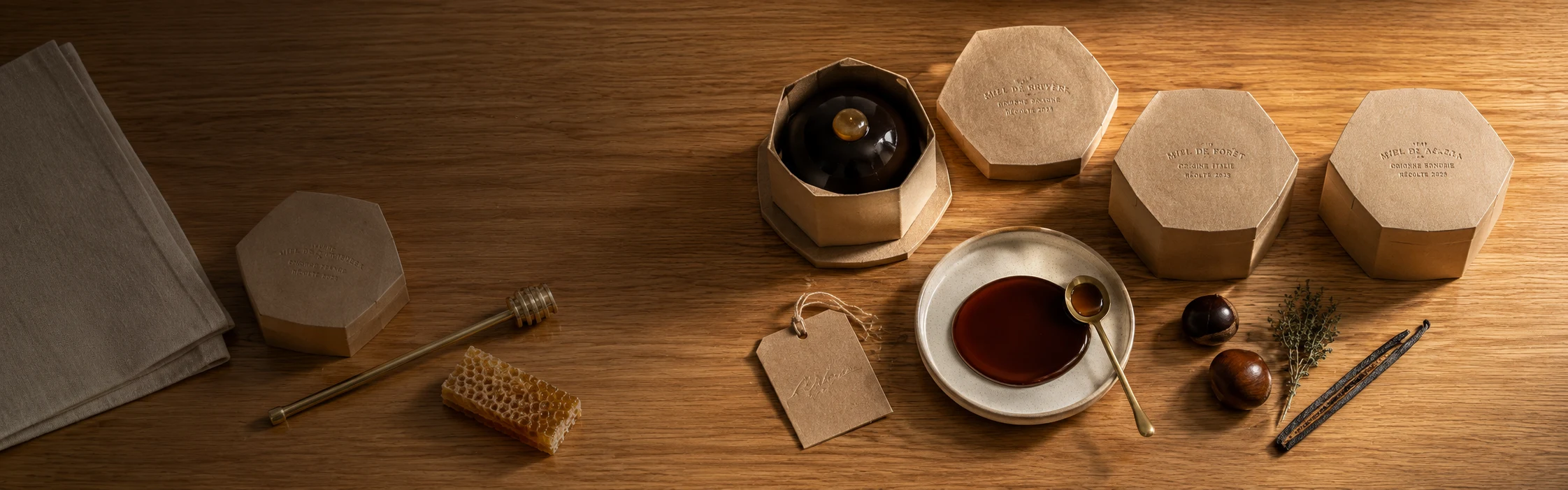
For the guest, this changes everything too. The dome you reserve for the Le Rucher capsule is a dome you can reserve only for those eight weeks. After that, the form returns to the archive. The next Automne, there will be a different ingredient, a different study, a different set of pieces.
Why this model, and why now
The model is older than the term suggests. The kitchen has always been seasonal — every chef who works with stone fruit in July and citrus in February already knows this. What the maison de saison structure does is make the seasonality explicit, limited, and complete. The summer entremet is not a summer addition to a year-round catalogue. It is the only entremet being made this summer.
The reason to do this now is partly cultural. The pace of the trade, like the pace of most consumer work, has accelerated in the last two decades toward continuous release: monthly drops, weekly specials, daily breads. There is good craft inside this pace, and there is also a great deal of work the maker does not have time to watch. The maison de saison is a counter-rhythm. Fewer pieces, more attention, longer pauses between them.
The reason to do this is also more selfish. A capsule that closes is a capsule the maker can finish. A capsule that runs forever is a capsule that, by its nature, becomes someone else's job to maintain. The maison de saison preserves the maker's authorship by drawing a line at the season's end.
What it does not promise
A maison de saison is not the same as a tasting menu, a private club, or a residency. The work is for sale, openly, to anyone who places an order during the capsule window. The maison is not invitation-only. What it commits to is what it sells, not who it sells to.
It is also not a guarantee of perfection. The maker is still one person, one hand, one kitchen. The discipline of the maison de saison is the framework within which the work is made — it does not replace the work itself. Each capsule must still earn its weeks.
What it asks of the guest
A maison de saison asks for one thing from the guest: patience for the rhythm. Capsules open on announcement. Reservations close when the runs are full. Pickup or delivery happens in defined windows. There is no buy-now button, no rush shipping, no perpetual availability. The work belongs to its season, and so does the act of receiving it.
The most-French thing about the maison is the kitchen itself — les petits gâteaux, les entremets, les chocolats, les gâteaux de cérémonie — the same compositional craft that has been the practice of small ateliers in Paris and Lyon for a century. The cadence is the second: the rhythm that frame imposes on the work in 2026.
The Vespre opens its first capsule, Le Rucher, on September 1, 2026.
More from the journal — read on.